Calm, Cohesive, Considered: A Room-by-Room Checklist for Curtain Finishing Details
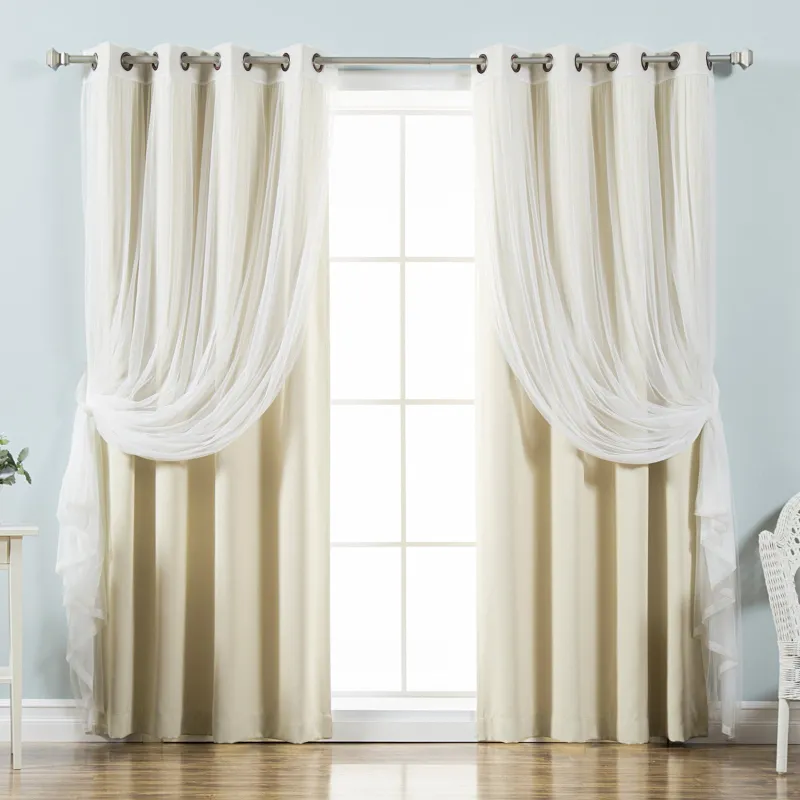
Photo: curtain interlining tieback pelmet trim detail in a tailored UK interior, via i5.walmartimages.com
Bespoke curtains can be measured perfectly and still look ordinary. What separates a truly custom treatment from a competent made-to-measure pair is the accumulation of small decisions: how the curtain returns to the wall, whether it is interlined, how it meets the floor, which tieback is chosen and whether the hardware is visible or discreet. These are not decorative extras to be added at the end. They are the details that give a room its composure.
The principle: spend where the eye rests
The most useful rule is to spend where the eye rests and where the hand operates. A generous return, a well-chosen lining and a solid pole or track will be noticed every day, even if they are not consciously admired. Elaborate trims and deep puddling are more visible, but they are also less forgiving in busy rooms. A calm house does not require every curtain to be identical; it requires the details to be consistent in spirit.
Sitting room: where presence matters
In a sitting room, interlining is usually worth the investment. It gives the fabric body, improves drape and helps to soften sound and draughts. A proper return to the wall is also important: it prevents light from leaking at the sides and makes the curtains look fitted rather than hung. If the room is period, a simple pelmet or a restrained trim can add formality, but it should not compete with the architecture.
Tiebacks are optional in a sitting room. Where they are used, they should be installed at the correct height and should not pull the curtain into an unnatural shape. Hardware should be substantial enough for the weight of the curtains. This is not the place to save on a flimsy pole; the eye will register the sag before it registers the fabric.
Dining room: formality without fuss
A dining room can carry more ceremony than a sitting room, but it rarely needs more clutter. Interlining and a neat return are the sensible foundations. A pelmet can be effective where the window is architecturally plain or where a unified look across several windows is desired. Trims should be chosen with restraint: a subtle tape or cord can lift a plain fabric, while a heavy fringe may date the scheme.
Puddling is best avoided in a dining room unless the space is large and the curtains are unlikely to be moved often. A short break at the floor is calmer and more practical. If tiebacks are used, they should be simple and well spaced; the dining room is a room for conversation, not for curtains that demand attention.
Bedroom: light control and quiet luxury
In a bedroom, the priorities are different. Blackout lining is often essential, and interlining adds softness and thermal benefit. Returns should be generous enough to reduce light at the edges, and a pelmet or a ceiling-fixed track may be appropriate where the window arrangement allows. Hardware should operate quietly and smoothly, particularly in a room used at night.
This is a room where a little luxury is justified: a beautifully made heading, a soft lining and a considered tieback can all contribute to a sense of calm. Trims should remain understated. Puddling can look romantic in a principal bedroom, but it should be planned with the floor covering and cleaning regime in mind. In a family bedroom, a clean floor break is usually the wiser choice.
Kitchen and breakfast room: practical calm
Kitchens and breakfast rooms demand restraint. Curtains here are exposed to steam, cooking smells and frequent handling, so the details should be practical as well as attractive. A simple heading, a washable or wipeable fabric and a shorter length are often preferable. Interlining may be useful for draughts, but it should not make the curtains difficult to manage.
Tiebacks can be useful where curtains would otherwise obstruct a work surface or a door. Avoid deep puddling and elaborate trims. Hardware should be easy to clean and robust enough for daily use. The aim is a quiet, tidy treatment that does not ask for special treatment.
Bathroom and hallway: restraint and resilience
In bathrooms, moisture is the deciding factor. Simple headings, minimal trims and a clean break above the floor are sensible. Returns should be neat, and hardware should be suitable for a humid environment. Puddling has no place here. In hallways and on landings, curtains are often asked to perform two jobs: dress the window and soften draughts. Interlining can be valuable, but the detailing should remain simple so that the space feels welcoming rather than overworked.
Where to save without compromising
There are sensible places to economise. A standard lining is often adequate in a low-use spare bedroom. A simple heading can be perfectly appropriate in a secondary room. Off-the-shelf hardware may be acceptable where it will be largely hidden, provided it is strong enough for the weight. What should not be saved is the quality of making at the top and sides of the curtain: the returns, the lining joins and the way the heading is constructed.
Cohesion across the house
A cohesive home does not mean identical curtains in every room. It means a consistent approach to proportion, hardware finish and the level of detail. If the sitting room has an antique brass pole, the bedroom need not match it exactly, but the choice should feel related. If trims are used, they should appear as a deliberate motif rather than an afterthought. Keeping the palette and the degree of formality within a narrow range will do more for cohesion than repeating the same fabric throughout.
The finishing details are where bespoke curtains earn their description. They are also where a homeowner can exercise judgement rather than simply following a trend. In Midhurst and across Sussex, the most successful schemes tend to be those that spend on the quiet, structural details and save on the conspicuous ones. The result is a house that feels tailored, calm and entirely its own.