Cloth as the Cornerstone: Giving Curtains the First Word in a Midhurst Colour Scheme
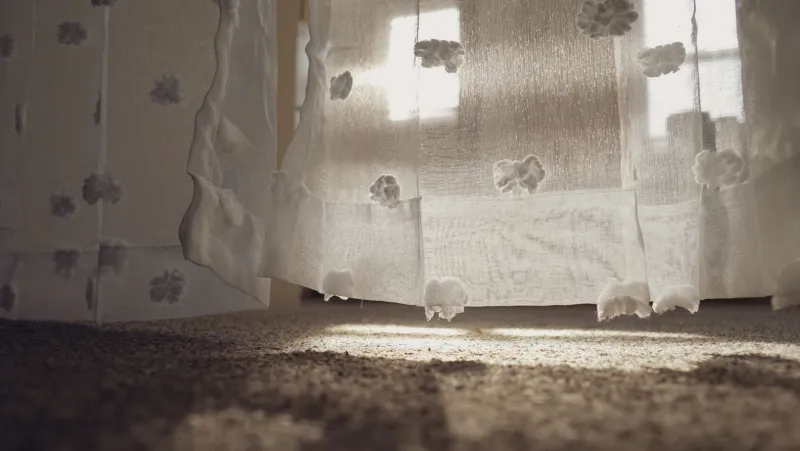
Paint charts are seductive. They promise transformation in a single afternoon, and they fit neatly into a handbag. Curtain fabric, by contrast, arrives on a roll, requires making up, and demands a commitment that can feel premature before the walls have been decided. Yet in many Sussex homes the order is reversed to better effect. The curtain is frequently the largest textile in the room, the element that filters every change of light, and the one furnishing that remains in place through summer and winter alike. Giving it the first word is not an affectation; it is a practical way to build a palette that holds together.
The largest textile sets the tone
A made-to-measure curtain covers a substantial vertical expanse. Even a modest window can carry several metres of cloth once fullness and heading are accounted for, and a bay or a pair of tall sash windows will carry considerably more. That quantity of fabric has a visual weight that paint alone rarely matches. It introduces texture, depth and a particular way of absorbing or reflecting daylight. When a scheme is assembled in the opposite order — walls first, curtains last — the curtain is too often asked to perform a supporting role that its scale cannot sustain. It becomes a matching exercise rather than a design decision.
Starting with the cloth allows the room to be organised around a material that will be present for years. A wool blend with a soft nap, a lined linen with a dry handle, or a silk-rich weave with a quiet sheen will each establish a different atmosphere. Paint can then be selected to support that atmosphere, rather than forcing the fabric to compete with it.
Reading colour in Midhurst light
Midhurst and the surrounding villages sit within a landscape that is generous with greenery and prone to shifting weather. Light here is rarely static. A colour that appears warm and chalky on a north-facing wall in the morning can turn grey by mid-afternoon, while a south-facing room may be flooded with a brightness that makes delicate tones look washed out. Period properties add their own variables: deep reveals, small panes, neighbouring buildings and mature trees all interrupt the light.
This is why a paint colour seen in isolation can be misleading. A curtain fabric, viewed in the same room and at the same times of day, gives a more honest account of how colour will behave. The folds of a curtain create areas of shadow and highlight that no flat wall can replicate. A fabric that seems too strong on a small sample may settle beautifully once pleated; one that looks discreet flat may disappear entirely when gathered. The room, not the sample card, is the proper testing ground.
Auditioning fabric against the room
A useful approach is to treat the curtain shortlist as a set of candidates rather than a single purchase. Order generous samples — ideally a metre or more of the favoured cloth — and pin them at the window at the intended drop. Leave them there for several days. Observe them against the wall finish currently in place, against the floor, and against any furniture that will remain. Morning, noon and artificial light at night will each tell a different story.
It is equally important to test the fabric with its intended lining or interlining. A lining changes not only the handle and drape but also the apparent colour of the face cloth. A warm interlining can soften a cool grey; a standard white lining may make a cream look sharper. For bespoke work, the lining is part of the colour decision, not an afterthought hidden behind it.
Building the palette outward from the curtain
Once a curtain fabric is chosen, the rest of the room can be composed around it with greater confidence. The paint colour need not match the cloth; indeed, a little separation is often more sophisticated. A pale wall can allow a patterned curtain to lead, while a deeper wall colour can make a lighter curtain appear more luminous. Wallpaper should be considered in terms of scale and rhythm as much as hue: a busy paper behind a boldly patterned curtain can create restless competition, whereas a quieter paper may allow the fabric's weave to be appreciated.
Upholstery and flooring then follow. A curtain can carry a colour that is picked up in a sofa throw, a rug border or a lampshade, creating repetition without uniformity. The aim is a scheme with a clear anchor and a few considered echoes. In a Sussex sitting room, that might mean a muted green curtain that relates to the garden beyond the window, with walls in a soft stone colour and a chair in a warmer neutral. The curtain has done the foundational work; the other elements refine it.
A practical sequence for a measured decision
For those planning a room in stages, a sensible order is: establish the curtain fabric and lining first; test them in situ; select wall finish; then consider upholstery and accessories. This sequence does not require every decision to be made at once. It simply prevents the curtain from arriving at the end of the process with too little influence and too many competing demands placed upon it.
There is also a commercial argument for choosing cloth early. Made-to-measure curtains involve lead times, workroom scheduling and fitting. If the fabric is settled before decorating begins, the making can proceed while the room is being prepared, and the finished curtains can be hung into a scheme that was designed to receive them. The result is calmer and more coherent than a last-minute search for something that will not clash with freshly painted walls.
Where a room begins
Curtains are sometimes treated as the final layer, the soft furnishing that completes a room once the serious decisions have been made. In practice, they are often the element best placed to begin it. Their colour, texture and scale are experienced daily, and their response to light is part of the room's character. For homeowners in Midhurst and across the Sussex downs, giving the cloth the first word is less a rule than a useful discipline: it asks the room to be considered as a whole, and it gives every later choice a clearer point of reference.