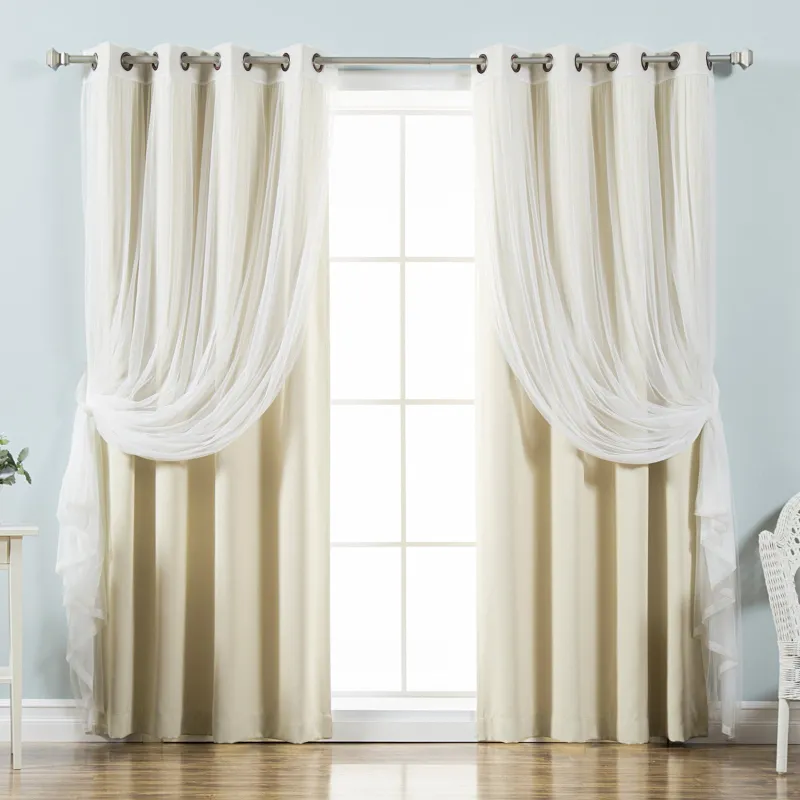
The Sample Stage: How to Test Curtain Fabric in the Room It Will Dress

Choosing a curtain fabric is rarely a matter of a single glance. A small cutting can appear assured in a showroom, yet subdued by mid-afternoon or surprisingly warm under a table lamp. For homeowners in Midhurst and across the Sussex Downs, where rooms often face changing garden light and period windows can alter the character of a colour, the sample stage deserves proper attention. It is the point at which a promising fabric becomes a known quantity.
Begin with a generous sample, not a snippet
When requesting samples, ask for the largest piece the fabric house will provide. A swatch no bigger than a playing card may reveal colour, but it says little about drape, pattern repeat or the way a weave behaves when gathered. If the fabric is wide, patterned or unusually textured, a metre cutting is a sounder investment than a handful of small chips. Record the reference number, colourway and composition as soon as the samples arrive; it is easy to confuse two similar neutrals once they are out of their packaging.
At the same time, note the practical specification. Rub counts, cleaning codes and light-fastness ratings are not merely trade details. They indicate whether a fabric is suited to a busy family sitting room, a quietly used guest bedroom or a window that receives strong sun for much of the day.
Pin it up at the window it will dress
A sample judged flat on a table is only half tested. Pin or temporarily hang the fabric at the actual window, at the intended drop and with the intended lining behind it. If a lining has not yet been chosen, place a plain white or ivory cloth behind the sample so that the fabric is not seen against bare glass.
Gather the sample loosely to suggest fullness. Curtains are rarely seen as a flat plane; they are seen in folds, and some fabrics lose depth or become muddy when pleated. Others gain a richness that is invisible when the cloth lies smooth. This is also the moment to check pattern placement. A motif that looks well proportioned on a card can become either too dominant or too sparse once repeated across a pair of full-length curtains.
Read the fabric through the day
Colour is not fixed. It changes with the angle and quality of light, and in Sussex the difference between a bright morning and a low winter afternoon can be considerable. Observe the sample at three distinct moments: in morning light, in the stronger light of afternoon, and under the artificial lighting used in the evening.
A north-facing room tends to cool colours and flatten warmth. A west-facing window may bathe a fabric in golden light for an hour or two, then shift it towards grey. Under LED lamps, reds can become more muted and blues more pronounced. The aim is not to find a fabric that looks identical in every condition, but to ensure that its shifts are agreeable rather than jarring. If a colour only pleases at midday, it is unlikely to remain a comfortable choice through the darker months.
Test it against the room, not in isolation
A swatch can be beautiful on its own and awkward beside the paintwork. Hold the sample against the wall colour, the woodwork, the floor and the principal upholstery. Compare it with any nearby rugs, artwork or stonework that will remain visible. In period properties around Midhurst, beams, brick and aged plaster can introduce warmth or shadow that alters a fabric’s apparent tone.
It is also worth viewing the sample from the adjoining room. Curtains are often seen through a doorway before they are seen closely, and a fabric that reads as a quiet neutral in one space may appear stronger from a distance. If the scheme connects to a hallway or dining room, check that the relationship is harmonious rather than merely acceptable.
Judge drape, weight and movement
Take the sample in hand and fold it as a curtain would fold. Notice whether it falls softly, holds a crisp edge or feels stiff and papery. A fabric with generous drape can carry a simple heading beautifully; a firmer weave may suit a more tailored treatment but require careful pleating.
Weight matters for practical reasons as well as visual ones. Heavier fabrics generally need more substantial poles, tracks and fixings, particularly at large windows. Lightweight fabrics may benefit from lining or interlining to give them body and to improve their hang. The sample stage is the right time to discuss these layers, because the choice of lining can alter both the colour and the behaviour of the face fabric.
Consider fading, cleaning and household wear
A curtain is a long-term resident. Before committing, consider how the fabric will respond to sunlight, cleaning and daily life. Strong afternoon sun can fade some dyes and weaken certain fibres over time; a lining with good UV resistance is a sensible safeguard. Check the cleaning instructions and decide whether the fabric can be cleaned in place, washed, or must be dry-cleaned. For homes with children, pets or frequent entertaining, a fabric that marks easily or snags readily may prove less practical than its appearance suggests.
This is not a reason to choose only utilitarian cloth. It is a reason to match the fabric to the room’s real use. A formal drawing room and a busy boot room make different demands, and a bespoke curtain should meet both with equal thought.
A final checklist before commissioning
- View the sample at the window, at the intended drop and in the intended fullness.
- Check it in morning, afternoon and artificial light.
- Compare it with paintwork, flooring, furniture and adjacent rooms.
- Handle it for drape, weight and crease recovery.
- Confirm pattern repeat, lining choice and cleaning requirements.
- Discuss fading risk and suitable linings for sunny windows.
- Consider the household’s daily wear and tear.
A little patience at the sample stage prevents costly disappointment later. The most successful made-to-measure curtains are not simply those with the most striking fabric; they are those whose colour, weight and practical qualities have been tested in the room they will dress. For Midhurst homeowners, that quiet period of observation is often the difference between a good choice and a lasting one.